
Solar + Storage Hybrid Bids in India: Sizing BESS for Dispatchability
India's renewable energy tenders have evolved from simple solar and wind procurement into increasingly complex hybrid structures that combine generation with storage to deliver dispatchable power. SECI, NTPC, and state agencies now regularly issue Round-the-Clock (RTC) renewable energy tenders, where the developer must supply power at a contracted schedule — not just when the sun shines.
For developers bidding these hybrid tenders, the sizing of the BESS component relative to the solar array is the most consequential technical and financial decision in the entire project. Over-size the battery, and the project economics collapse under excess capital cost. Under-size it, and the generation shortfall penalties under the PPA will exceed any savings on battery capex.
This article provides a framework for hybrid solar + BESS sizing for Indian tender conditions.
Understanding the RTC Tender Framework
SECI and state agencies procure Round-the-Clock renewable power in two common structures:
Structure 1 — Fixed supply profile: The developer must supply power at a specified profile — often flat at a contracted capacity factor (e.g., 80% CUF) or at a peak-biased profile (more power during 6 PM – 10 PM, less at night). Power below the contracted schedule triggers "shortfall charges" — typically ₹3–6/kWh or a penalty multiplier on the tariff.
Structure 2 — Minimum supply hours: The developer must supply at least X hours of power per day at rated capacity. The timing is flexible — the developer optimises within a 24-hour window. Battery sizing is constrained by the minimum daily supply requirement and the solar resource profile.
In both cases, the BESS must bridge the gap between solar generation (which follows the sun, not the dispatch schedule) and the contracted supply profile.
The Core Sizing Problem
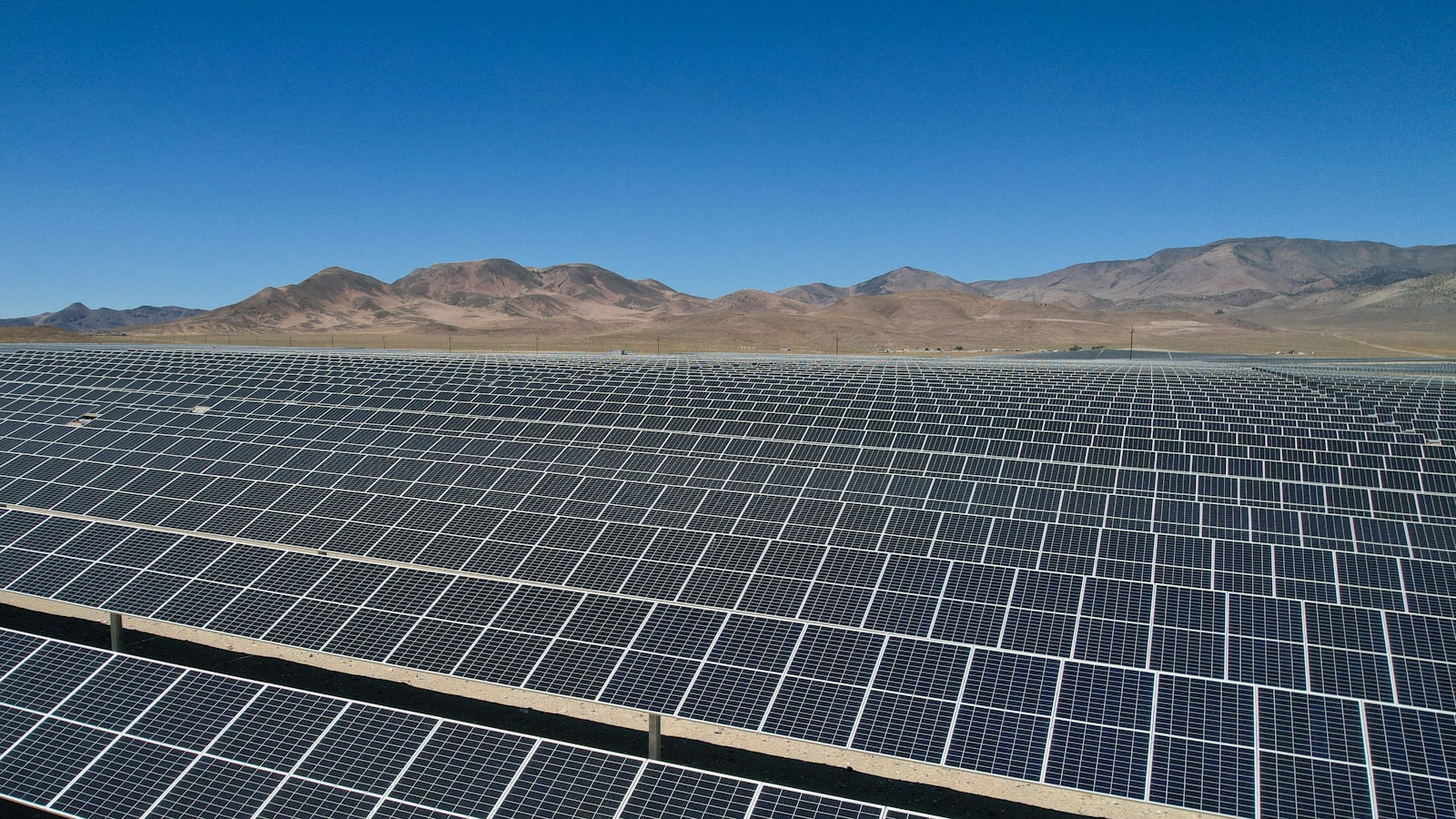
Consider a 100 MW solar farm in Rajasthan attempting to supply 80 MW continuously for 24 hours. Solar generates power for approximately 7–8 hours per day at meaningful output (above 30% of peak), with peak output around 90–95 MW at noon. At night and in the early morning and late evening, solar output is zero.
To supply 80 MW continuously from a 100 MW solar farm, the BESS must store excess midday solar and discharge it during the dark hours — approximately 16 hours of storage at 80 MW output is required, implying 1,280 MWh of storage. This is clearly uneconomic (storage capex would dwarf the solar capex at current prices).
The practical approach is to:
- Accept that the RTC profile does not mean truly continuous supply
- Optimise the contracted schedule to match what solar + BESS can actually deliver cost-effectively
- Design the BESS to cover the highest-value hours (evening peak), not round-the-clock
For most Indian hybrid tenders, the optimal BESS size delivers 4–6 hours of storage at rated power — sufficient to cover the 6 PM to midnight peak period from stored solar energy, with morning and overnight supply handled through whatever solar is available plus grid back-up arrangements specified in the PPA.
The Sizing Methodology
Hybrid sizing requires hourly simulation of:
1. Solar generation profile: Use TMY (Typical Meteorological Year) data for the project location. Rajasthan's best sites (Jaisalmer, Bikaner) achieve P50 CUF of 28–32%; Gujarat coastal sites achieve 24–27%. Run simulations for P50 (median), P75 (slightly below average), and P90 (1-in-10 poor year) scenarios.
2. Battery dispatch algorithm: The BESS is charged from solar surplus (solar above the contracted supply level) and discharged to cover solar deficits (solar below the contracted level) during contracted supply hours. The dispatch algorithm must respect:
- State of charge limits: 10% minimum SOC (to protect cell life), 95% maximum
- Power limits: Battery can charge or discharge at maximum C-rate specified in the equipment spec (typically 0.5C to 1C for grid storage)
- Round-trip efficiency losses: Each MWh cycled through the battery loses approximately 10–15% in RTE losses
3. Penalty calculation: For each hour when supply falls below the contracted schedule, apply the shortfall charge from the PPA. The annual penalty is the integral of these shortfall hours × the penalty rate.
4. BESS capex function: As BESS size increases, capex increases proportionally (₹60–80 lakh/MWh for equipment, plus fixed costs). The optimal BESS size is where the marginal reduction in penalty from adding 1 MWh more battery equals the annualised capital cost of that additional 1 MWh.
In practice, this optimisation typically lands at 3–6 hours of battery relative to contracted capacity. For a 100 MW contracted supply, 300–600 MWh of BESS is the normal range for economically optimal designs.
The Tariff Bid Implications
In a competitive hybrid tender, the tariff bid must reflect:
- Solar capex (₹35–45 lakh/MW for Rajasthan ground mount, 2026 costs)
- BESS capex (₹70–90 lakh/MWh, depending on size and thermal specification)
- Land, civil, grid connection, development costs
- O&M for both solar and BESS over the PPA period
- Penalty reserve (expected penalty at P90 solar scenario)
- Financing costs
The tariff floor for well-sized hybrid projects in Rajasthan at 2026 system costs is approximately ₹4.80–5.50/kWh — above the ₹2.60–3.00/kWh tariff for standalone solar, but competitive with grid parity for 24-hour supply from coal + storage combinations.
The competitive range in recent SECI hybrid tenders has been ₹5.00–5.80/kWh. Bidders with access to lower-cost cell supply or more efficient financing can bid towards the lower end; first-time or capital-constrained bidders will naturally bid higher.
Common Sizing Mistakes That Destroy Project Economics
Mistake 1: Sizing BESS for P90 solar year at base capacity
Some developers size the BESS to cover contractual supply shortfalls even in a P90 (bad) solar year without any shortfall charges. This significantly oversizes the battery for average conditions. The correct approach is to size for P50 and model expected penalty at P90 — if the penalty reserve is small relative to avoided battery capex, the undersizing is economically justified.
Mistake 2: Ignoring degradation in discharge capacity
A 500 MWh BESS commissioned in Year 1 has 500 MWh of usable capacity. By Year 7, at 2% annual capacity degradation, the same system has approximately 426 MWh effective capacity. Hybrid sizing should model degraded BESS capacity in Years 5–10 and either plan for capacity augmentation or accept increasing penalty in later years — with the costs appropriately modelled.
Mistake 3: Using nominal round-trip efficiency without auxiliary deduction
The battery system's nameplate RTE (85–90%) does not account for auxiliary power consumption — HVAC, BMS, monitoring systems. Net system RTE in Indian conditions (with active cooling load) is typically 80–86%, not 88–92%. Using nameplate efficiency overestimates the battery output and underestimates the solar capacity needed to fill the battery.
Mistake 4: Not modelling the dispatch algorithm
Some developers use a simplified rule of thumb for sizing (e.g., "4 hours of battery per MW of solar") without running hourly simulations. In locations with high solar resource variability (monsoon cloudiness in coastal sites, dust events in Rajasthan), simplistic rules can produce significantly wrong BESS sizes. Hourly simulation is not optional for a competitive bid.
The Practical Takeaway
For most SECI and state hybrid tenders with 4-hour evening peak supply obligations, the range 400–600 MWh of BESS per 100 MW of solar (4–6 hour ratio) produces the best financial outcome in Rajasthan and Gujarat conditions. Tamil Nadu and Andhra Pradesh, with more variable solar resources due to cyclone and monsoon cloud cover, may justify 5–7 hours of storage.
The Indian hybrid market is maturing rapidly. Developers who invest in rigorous hourly simulation tools and have access to robust LFP BESS supply at competitive prices will win the next round of hybrid tenders. Those who rely on rule-of-thumb sizing and high-cost imported complete systems will find it difficult to compete at the tariff levels the market is establishing.
SilicIndia Energies provides 1 MWh and 2 MWh LFP container BESS systems designed for hybrid solar applications. Our systems include energy management software with solar forecast integration for optimal charge/discharge dispatch. Contact our team for a hybrid sizing analysis for your specific project location and tender requirements.