
Rajasthan's 2,000 MW Storage Pipeline: Upcoming Tenders and What Developers Should Watch
Rajasthan holds a paradox at the heart of India's energy transition. The state has India's finest solar resource — Global Horizontal Irradiance of 6.0–6.5 kWh/m²/day in Jaisalmer and Barmer, the best in the subcontinent outside Ladakh — yet it also has one of India's most acute renewable curtailment problems. In peak solar months, Rajasthan curtails 15–20% of its potential solar generation because the grid cannot absorb it.
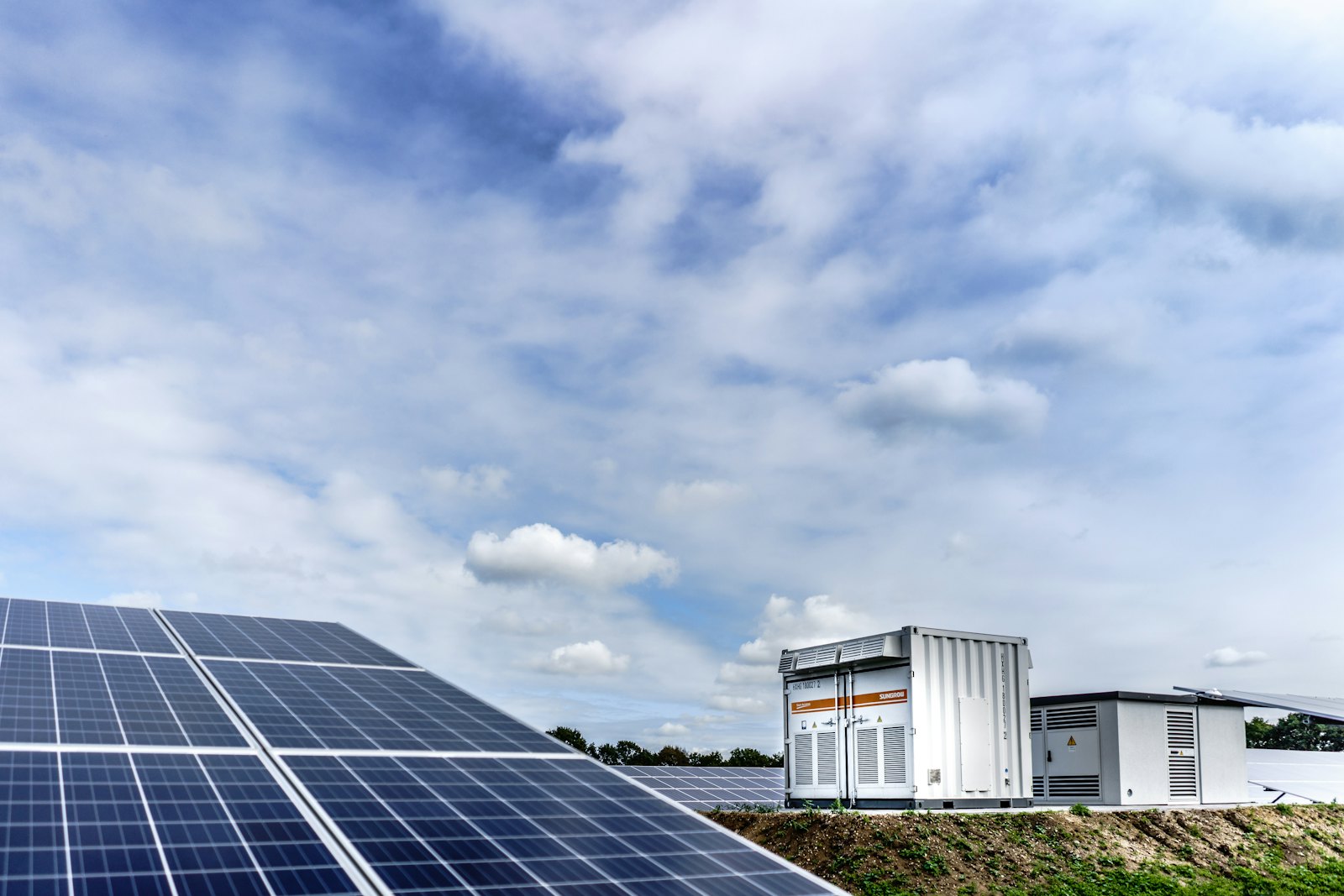
The solution is storage, and Rajasthan knows it. The state has been building toward a 2,000 MW storage programme — the largest state-level storage pipeline in India — through a combination of central government alignment (SECI tenders often cite Rajasthan sites), state procurement (RVUNL and RVPNL), and private sector development under the Rajasthan Renewable Energy Policy 2023.
This article maps Rajasthan's storage pipeline, identifies the upcoming tenders and timelines, and highlights what developers need to watch.
Why Rajasthan's Curtailment Problem Is Acute
India's western grid, of which Rajasthan is the dominant generation node, was designed for a very different generation mix than what exists today. The 765 kV and 400 kV transmission network in Rajasthan was built to carry large thermal power plants' output southward to Maharashtra and Gujarat and eastward to Delhi-NCR. This network was not sized for the distributed, resource-concentrated generation pattern of utility-scale solar.
Rajasthan has commissioned approximately 18,000 MW of solar capacity, concentrated in Jaisalmer, Barmer, Jodhpur, and Bikaner districts. The transmission capacity to carry this power to consuming states — primarily through the ISTS corridors managed by PGCIL — is insufficient during peak generation hours (11 AM – 2 PM). When the transmission is full, Rajasthan SLDCs curtail solar generation. Curtailment in the Bikaner-Jaisalmer cluster has exceeded 2,000 MWh on single days.
The economic impact is significant: every MWh curtailed represents foregone income for solar IPPs (who have PPAs guaranteeing payment for contracted generation). Curtailment liabilities are a major point of dispute between solar developers and Rajasthan DISCOMs.
Storage resolves curtailment in the specific cases where the curtailment is caused by transmission congestion rather than demand deficit. A BESS at the generation-end substation absorbs the curtailed solar and discharges later when transmission capacity is available — converting a curtailment loss into an arbitrage opportunity.
The Pipeline: What Is Coming and When
Rajasthan's 2,000 MW/8,000 MWh storage pipeline is not a single tender — it is an aggregation of multiple procurement mechanisms:
1. SECI VGF Phase 1 Rajasthan Tranche (1,000 MWh)
Within SECI's national 4,000 MWh VGF tender, approximately 1,000 MWh is expected to be allocated to Rajasthan-based projects, based on PGCIL's grid stability assessment that identified the western Rajasthan grid as a priority storage zone. Developers bidding the SECI national tender can specify Rajasthan project sites to meet this tranche.
Key Rajasthan PGCIL injection points for SECI storage: Fatehgarh (400 kV), Bhadla (400 kV), Barmer (765 kV), Akal (400 kV). These substations have existing ISTS connectivity and have been identified in PGCIL's BESS Grid Study as optimal storage siting points.
Timeline: SECI LoA expected Q3 2026; commissioning 24 months post-LoA.
2. RVUNL State Procurement (500 MW)
Rajasthan Vidyut Utpadan Nigam Ltd (RVUNL) — the state generation company — is procuring 500 MW/2,000 MWh of BESS for state grid support applications under its own tender. The RVUNL tender is distinct from SECI — it uses a state offtake structure (RVPNL as the off-taker) rather than SECI's VGF model.
The RVUNL RfS is expected in Q4 2026, with bidding in Q1 2027. Unlike SECI's all-India open tender, RVUNL's procurement has a preference for projects with Rajasthan state nexus (developer entities registered in Rajasthan, or projects with Rajasthan-based EPC contractors). Read the eligibility criteria carefully.
3. Rajasthan Green Energy Corridor + Storage (500 MW)
PGCIL's Green Energy Corridor Phase 2, which covers Rajasthan and Himachal Pradesh, includes provisions for storage at identified substation nodes. This is not a standalone BESS tender but rather storage integrated into the transmission infrastructure project. PGCIL develops these assets under its regulated tariff framework — not through competitive auctions — making it less relevant for private developers but significant for understanding grid investment.
4. Private Developer + Merchant Arbitrage (500 MW)
A growing portion of Rajasthan's storage pipeline involves private developers building BESS without government offtake contracts, earning from exchange market price arbitrage and ancillary service markets. This segment is nascent — merchant BESS without any offtake is not yet bankable in India — but several developers are exploring structures with partial merchant exposure backed by IREDA or PFC financing.
For merchant storage to work in Rajasthan, the exchange price differential between midday solar surplus (₹0–2/kWh) and evening peak (₹6–10/kWh) must persist with sufficient frequency. Rajasthan's 2024–2025 exchange data shows this differential occurring on 180–200 days/year — adequate for rough merchant economics, but volatile enough to require careful financial modelling.
Site-Specific Considerations for Rajasthan BESS
Jaisalmer and Barmer districts: Best solar resource, highest curtailment probability, best economics for solar-coupled storage. Temperatures: Summer peaks of 47–49°C. Liquid cooling mandatory. Dust storms (Aandhi) require sealed enclosure standards — IP55 minimum for outdoor equipment.
Bikaner and Nagaur: Strong solar resource, significant curtailment, closer to Delhi load centre via the 765 kV Bikaner-Sikar corridor. Grid connection availability at Bikaner's PGCIL substation is constrained — LTOA applications are competitive.
Jodhpur-Pali corridor: Moderate solar resource, reasonable transmission access. RVUNL's own power plants in this corridor make it likely that RVUNL's 500 MW procurement will favour this geography for at least part of the tender.
Ground conditions: Rajasthan's Thar desert terrain features hard calcite rock in western districts and sandy loam in eastern. Foundation design for BESS containers must account for local bearing capacity — typically 50–80 kN/m² in sandy areas, requiring deeper or wider spread footings.
Water for construction: Rajasthan is water-scarce. Concrete for BESS foundations and access roads requires water transport or treatment of groundwater. Build water procurement and treatment into project construction budgets.
The Investment Case: Why Rajasthan Deserves Attention
Rajasthan combines the three factors that make storage investment compelling: abundant solar resource creating the charging economics, strong curtailment creating urgency, and a regulatory environment that is among the more progressive in India for storage procurement.
The Rajasthan Renewable Energy Policy 2023 explicitly supports storage development, provides land facilitation for storage projects through RRECL (Rajasthan Renewable Energy Corporation Ltd), and offers stamp duty waivers on land for RE+storage projects. These provisions reduce the transaction friction of developing in Rajasthan compared to states with less supportive frameworks.
The 2,000 MW pipeline, fully developed, represents ₹8,000–12,000 crore of BESS equipment procurement opportunity. Even at 20% of pipeline realisation in 2026–2027, the equipment requirement for 400 MW is substantial. Supply chain preparation for Rajasthan's storage wave — including securing cell supply, PCS orders, and local civil contractors — should begin now.
SilicIndia Energies has active discussions with several developers bidding the SECI VGF Rajasthan tranche and RVUNL's upcoming tender. Our BESS containers are designed for the 50°C ambient conditions of western Rajasthan, and our Gujarat integration facility provides efficient logistics to Rajasthan project sites. Contact our project team to discuss equipment supply for Rajasthan storage projects.